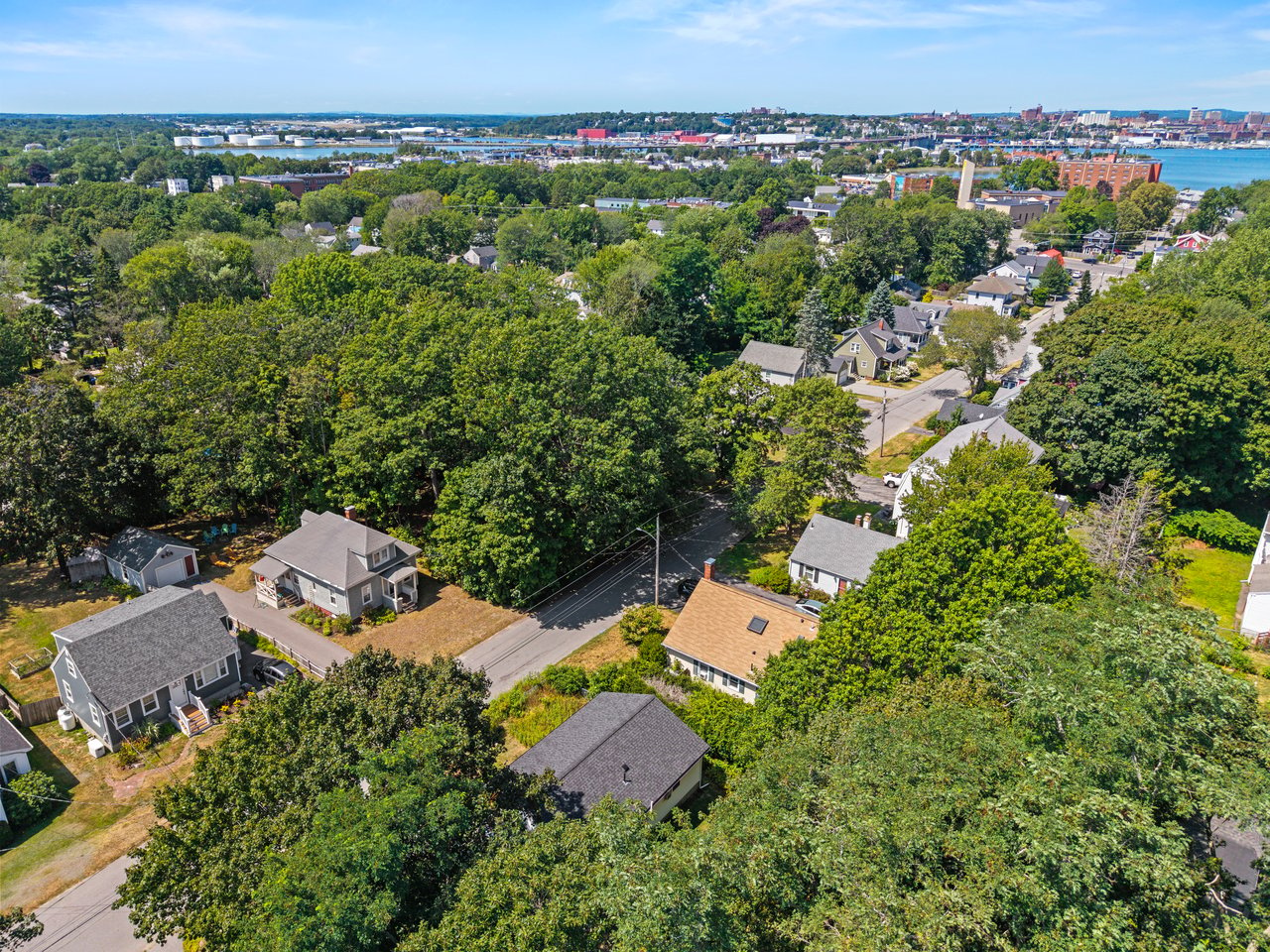
As part of our monthly series breaking down short-term rental regulations across Southern Maine communities, this month we’re taking a closer look at South Portland.
South Portland’s ordinance reflects that balancing act. The City allows short-term rentals, but it regulates what types of properties are eligible, whether the owner must live on-site, and how those rentals must operate. In other words, this is not a “buy anything and Airbnb it full-time” market.
If you’re thinking about buying a property to use as an Airbnb or VRBO, or you’re a homeowner exploring whether short-term rental income could help offset your mortgage or expenses, South Portland is a city where the details matter. While the City does allow short-term rentals, not every property can be used as a full-time vacation rental, and the rules vary depending on whether the home is owner-occupied, where it’s located, and how the property is configured.
For anyone who wants to review the regulations directly, South Portland provides information through its official Short-Term Residential Rentals page, its registration portal, the City’s Chapter 14 Licenses ordinance, and the City’s published Table 14-805, which lays out the rules for Hosted Home Stays and Non-Hosted Home Stays, including structure eligibility, owner-occupancy requirements, minimum stay rules, occupancy limits, and inspection requirements.
South Portland Short-Term Rental Rules: Hosted vs. Non-Hosted at a Glance
Category | Hosted Home Stay | Non-Hosted Home Stay |
|---|---|---|
Basic concept | Owner lives on-site while guests are staying at the property. | Owner does not need to be present during the guest’s stay. |
Property types allowed | May be operated in a one-family home, including certain associated authorized ADUs, or in a 2-, 3-, or 4-unit property. | May be operated in a one-family detached home, certain associated authorized ADUs, 2-, 3-, or 4-unit properties, certain multi-owner dwelling structures, certain multi-owner mixed-use structures, or certain authorized mixed-use structures. |
Can the rental be just part of the home? | Yes. It can be the whole dwelling unit or only a portion of it, but if only part is rented it must include at least a sleeping room and access to a bathroom. | No. The entire dwelling unit must be rented. |
Must the property be owner-occupied? | Yes. At least one dwelling unit on the property must be the owner’s primary residence. | No. The dwelling may or may not be the owner’s primary residence. |
Owner residency / presence requirement | Yes. If it is a single-family property, the owner must be present in the dwelling unit during the rental period. If it is a 2-, 3-, or 4-unit property, the owner must be present in one of the dwelling units on the property during the rental period. | No owner on-site requirement during the stay. |
Sworn primary residence statement required? | Yes | No |
Homestead exemption evidence required? | Yes | No |
Length of guest stay | Less than 30 consecutive days. | At least 7 consecutive days and less than 30 consecutive days. If a guest leaves early, the unit still has to remain vacant for the rest of that 7-day minimum period. |
Annual cap on rental days | No annual cap listed in Table 14-805. | No annual cap listed in Table 14-805. |
Occupancy limit | Up to 2 guests per STR guest bedroom, with a maximum of 6 guests total. | Up to 2 guests per bedroom, with a maximum of 6 guests total. |
Registration applies to… | Each dwelling unit (or authorized ADU), not just the owner generally. | Each dwelling unit. |
Who reviews the registration? | City Clerk | City Clerk |
Inspection requirement | Fire inspection before the initial registration, then additional inspections if requested by City officials. | Fire inspection before the initial registration, then additional inspections if requested by City officials. |
Notice to neighbors / tenants | No general neighbor notice requirement listed in the table. | In 3- and 4-unit buildings, when a new long-term tenant moves in, the owner must obtain written acknowledgment that the tenant received notice of the owner’s intent to operate a short-term rental in the building during that tenancy. |
Notice to City Clerk if property is sold or transferred | No | Yes |
Zoning / location limits | Allowed in all zoning districts, subject to the ordinance requirements. | Prohibited in residential and residential conditional/contract zoning districts listed by the City at the time of enactment. As of 5-22/23, those districts are RF, AA, A, G, VR, RT, WR, A-1, G-1, G-2, G-3, G-4, G-5, G-6, G-7 and O’NEIL. |
Important ADU limitation | Hosted Home Stays are prohibited in Post-Ordinance #4-22/23 ADUs. | Non-Hosted Home Stays are also prohibited in Post-Ordinance #4-22/23 ADUs. |
A few practical takeaways from the table
- South Portland defines a short-term rental as a rental of less than 30 consecutive days.
- All South Portland short-term rentals must be registered with the City before they can legally operate or be advertised.
- South Portland allows two categories of STRs: Hosted Home Stays and Non-Hosted Home Stays.
- Hosted Home Stays are owner-occupied short-term rentals in the owner’s primary residence, and the owner must be present during the short-term rental period.
- Non-Hosted Home Stays do not require the owner to be present, but they are more restricted and must be rented for at least 7 consecutive days and less than 30 days. Non-Hosted Home Stays are prohibited in all residential and residential conditional/contract zoning districts (at time of enactment of 5-22/23, those districts are RF, AA, A, G, VR, RT, WR, A-1, G-1, G-2, G-3, G-4, G-5, G-6, G-7 and O’NEIL).
- Apartment buildings with five or more units are not part of the STR framework, and some multi-unit and multi-owner properties have additional restrictions.
- If you’re buying with STR income in mind, South Portland is a market where due diligence matters.
What Counts as a Short-Term Rental in South Portland?
South Portland defines a short-term residential rental as the use of a dwelling unit or, where permitted, an accessory dwelling unit for lodging for less than 30 consecutive days in exchange for compensation.
In order to legally advertise and operate a short-term rental in South Portland, the property must be registered with the City and comply with the City’s ordinance and operating requirements.
The Two Types of Short-Term Rentals Allowed in South Portland
South Portland’s ordinance divides short-term rentals into two categories: Hosted Home Stays and Non-Hosted Home Stays.
1. Hosted Home Stay
A Hosted Home Stay is a short-term rental in a dwelling unit that is the owner’s primary residence, and the owner must be present during the short-term rental period, including overnight.
This is the classic owner-occupied short-term rental model. The owner is still living on the property while guests are there, which is one of the key ways South Portland distinguishes a hosted rental from a more investment-oriented short-term rental.
Under South Portland’s rules, a Hosted Home Stay may include:
- a one-family dwelling unit, including an associated authorized accessory dwelling unit, or
- a two-, three-, or four-family dwelling unit
However, Hosted Home Stays are prohibited in Post-Ordinance #4-22/23 accessory dwelling units, which is an important detail for anyone looking at a property with a newer ADU.
If only part of the dwelling unit is being rented, the hosted rental must still include at least a sleeping room and access to a bathroom.
2. Non-Hosted Home Stay
A Non-Hosted Home Stay is a short-term rental where the owner is not required to be present during the guest’s stay.
This is the category that matters most for buyers and investors because it is the one that can allow a property to function more like a traditional Airbnb or vacation rental without the owner living on-site during each stay.
That said, South Portland is much more restrictive with non-hosted rentals than it is with hosted ones.
Under Table 14-805, a Non-Hosted Home Stay must be rented for at least 7 consecutive days and less than 30 days. If a guest leaves early, the dwelling unit must remain vacant for the balance of that 7-day minimum stay period. That 7-night minimum is one of the most important rules for buyers and investors to understand, because it means South Portland does not allow the typical “weekend Airbnb” model for non-hosted rentals.
A Non-Hosted Home Stay must be the entire dwelling unit, not just a room or portion of the home, and may include:
- a one-family detached dwelling unit or associated authorized accessory dwelling unit
- a two-, three-, or four-family dwelling unit
- a multi-owner dwelling unit structure
- a multi-owner mixed-use structure
- an authorized mixed-use structure
However, Non-Hosted Home Stays are prohibited in Post-Ordinance #4-22/23 accessory dwelling units.
The Most Important Rule for Buyers and Investors
One of the biggest takeaways from South Portland’s ordinance is this:
Not every property in South Portland can be used as a non-owner-occupied short-term rental.
South Portland does allow non-hosted rentals in certain property types, but the rules are much narrower than many buyers expect. The City distinguishes between hosted and non-hosted use, applies different operating standards to each, and places limitations on certain structures and accessory dwelling units.
If you’re a buyer hoping to purchase a property and operate it as an Airbnb or VRBO, you should not assume that a home is eligible just because it looks like a good vacation rental or because it may have been rented in the past. The property’s structure type, whether it is owner-occupied, whether it includes an ADU, and whether it fits the City’s STR framework all matter.
This is one of the biggest differences between South Portland and a more vacation-oriented market where non-owner-occupied short-term rentals are broadly allowed.
Additional South Portland STR Rules to Know
Beyond the hosted vs. non-hosted distinction, South Portland’s ordinance and Table 14-805 include several additional rules that homeowners and buyers should know about.
Owner Occupancy and Primary Residence Matter for Hosted Rentals
Hosted Home Stays must be tied to the owner’s primary residence. South Portland’s ordinance points to documentation such as a Maine homestead exemption and other records as evidence of primary residency. Hosted rentals are intended for true owner-occupied homes, not second homes being presented as primary residences for licensing purposes.
Occupancy Limits Are Specific
South Portland’s table also sets occupancy limits:
- Hosted Home Stay: 2 guests per short-term rental guest bedroom, with a maximum of 6 guests total
- Non-Hosted Home Stay: 2 guests per bedroom, with a maximum of 6 guests total
Those occupancy limits are worth paying attention to, especially for buyers evaluating whether a property’s layout will work for their intended use.
You Cannot Advertise Without a Registration Number
South Portland prohibits owners from advertising a short-term rental without including a valid City-issued registration number in the listing or advertisement.
Event-Style Use Is Not Allowed
The ordinance also prohibits guests from using a short-term rental for larger event-style gatherings such as parties, weddings, conferences, fundraisers, or similar events that exceed the permitted occupancy or otherwise create a different use of the property.
The Owner Is Still Responsible for Compliance
Even if a property manager or co-host is handling bookings and guest communication, the owner remains responsible for making sure the property operates in compliance with the ordinance.
Registration, Renewal, and Inspection Requirements
All South Portland short-term rentals must be registered with the City before they can legally operate.
Only the owner of the property may register the dwelling unit for short-term rental use. The owner must also identify a local emergency contact or registered agent who can respond to complaints or issues related to the rental.
South Portland’s registration process is handled through the City Clerk’s office and online portal. The City notes that a completed application is required every year, along with payment and any supporting documentation. Owners should expect to provide materials such as proof of insurance, a floor plan, and other required application information as part of the registration process.
The City also notes that applications typically take around two weeks to move through the approval process once all materials have been submitted.
In addition, the ordinance requires an inspection by the Fire Chief or designee prior to the initial registration for both Hosted and Non-Hosted Home Stays, with additional inspections possible at the request of City officials.
What This Means for South Portland Buyers
The City clearly draws a distinction between owner-occupied Hosted Home Stays and more investment-style Non-Hosted Home Stays. Property type matters. Ownership and residency matter. The presence of an ADU matters. And if you’re hoping to operate a non-hosted rental, the 7-night minimum stay requirement is a major factor that can affect whether the numbers still work for your plans.
That doesn’t mean there aren’t opportunities, but it does mean buyers should be careful about making assumptions based on a property’s appearance, a seller’s prior use, or what they have seen on Airbnb or VRBO.
If you’re buying with short-term rental income in mind, this is one of those situations where it’s worth slowing down and confirming exactly what category of STR use would be allowed for that specific property before you move forward.
Why Homeowners Consider Short-Term Rentals
We talk to homeowners all the time who are interested in the short-term rental market for a variety of reasons.
For some, it’s simply a financial decision. Rental income can help offset a mortgage, rising property taxes, insurance costs, utilities, and maintenance expenses. Others may own a property they only use part of the year and want to generate some income when they are not occupying it themselves.
In other cases, owners view real estate as both a lifestyle purchase and an investment. A property in Southern Maine may serve as a second home now while also offering long-term appreciation and occasional income potential.
And sometimes it’s less about pure investment and more about flexibility. A homeowner may want the ability to occasionally rent out a portion of their home or an additional unit on the property while still keeping the property in the family long term.
Why Travelers Continue to Choose STRs
Short-term rentals remain popular because many travelers are looking for something different from a traditional hotel stay.
Families often prefer having everyone under one roof rather than splitting up between multiple hotel rooms. A kitchen allows guests to prepare meals, save money, and settle in more comfortably. Others simply prefer the privacy of a home and the opportunity to stay in a neighborhood rather than a commercial lodging area.
For many visitors to Greater Portland, a short-term rental can offer a more local experience, especially when they want to be close to Willard Beach, Bug Light, Knightville, the Greenbelt, or downtown Portland while still having the feel of a home base.
The Bigger Debate Around STRs
Like many communities in Maine and across the country, South Portland has spent the last several years balancing competing priorities when it comes to short-term rentals.
On one hand, property owners often want flexibility in how they use their homes and the ability to generate supplemental income. On the other hand, residents and housing advocates have raised concerns that investor-owned short-term rentals can remove homes from the year-round housing market, particularly in desirable neighborhoods where supply is already tight.
Final Thoughts
South Portland has one of the more detailed short-term rental frameworks in Southern Maine. It still provides opportunities for homeowners to earn supplemental income, but it does so with a clear emphasis on neighborhood compatibility, life-safety standards, and preserving long-term housing stock.
If you’re considering buying a home in South Portland with short-term rental potential in mind, or you already own a property and want to better understand how the City’s rules apply to your situation, feel free to reach out. We’re always happy to help buyers, sellers, and investors navigate the local market with a clear understanding of the local rules that may impact their plans.


